
Raising Cane’s has built its whole identity around simplicity. One love, one menu: chicken fingers, crinkle cut fries, Texas toast, coleslaw, and that famous Cane’s Sauce.
There’s no sprawling menu board to decode and no dozens of combos to compare, which sounds like it should make life easier if you’re managing a food allergy.
A short menu does not mean an allergen-free menu. Several Raising Cane’s signature items contain common allergens such as milk, egg, wheat, and soy.
Shared fryers and prep areas can also increase the risk of cross-contact, which may not be clear from the ingredient list alone. Some allergens, like fish, may also appear in unexpected items such as sauces.
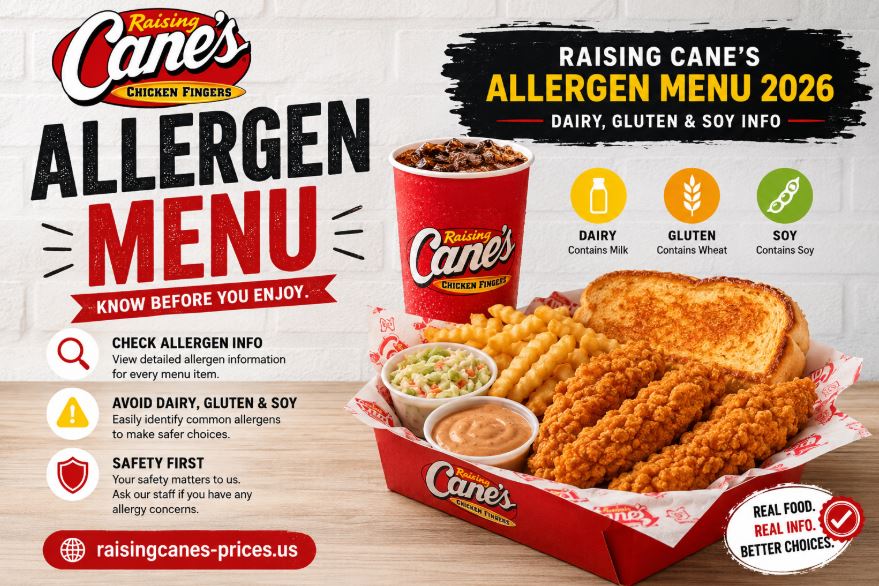
This guide walks through what’s actually in Cane’s food, going allergen by allergen, so you can get a real sense of what’s likely safe, what needs a second look, and what’s worth asking staff about before you order.
Think of it as a starting point rather than the final word, since restaurant ingredients and prep methods can change, and it’s always worth confirming details with the specific location you’re visiting.
How Raising Cane’s Handles Allergen Information
Raising Cane’s does make allergen information available to guests, but it helps to understand what that actually means in practice. The chain isn’t a certified allergen free kitchen.
There’s no separate space walled off from wheat, dairy, or egg products. Everything is prepared in the same kitchen, often using the same equipment.
That means the allergen guide is really best used for two things. First, figuring out which allergens show up as actual ingredients in a given item.
Second, understanding where cross contact is likely because of shared prep.Both of these matter quite a bit. An item can be completely free of an allergen by recipe and still pick up traces of it during cooking simply because of what else is sharing the fryer or the counter.
Because ingredients, suppliers, and prep procedures can shift over time or vary slightly by location, the safest approach is to check the most current official allergen information directly from Raising Cane’s, either in store or online, rather than relying only on any single write up, including this one.
Raising Cane’s Allergen
Individual Menu Items
| Menu Item | Serving Size | Allergens |
|---|---|---|
| Chicken Finger | 1.9 oz (55 g) | Egg, Milk, Wheat |
| Crinkle-Cut Fries | 5.1 oz (144 g) | Egg, Milk, Wheat* |
| Texas Toast | 1.7 oz (48 g) | Milk, Soy, Wheat, Sesame |
| Coleslaw | 3.1 oz (87 g) | Egg |
| Cane’s Sauce | 1.5 oz (43 g) | Egg, Soy, Fish |
| Chicken Sandwich | 10.4 oz (296 g) | Egg, Fish, Milk, Soy, Wheat, Sesame |
Raising Cane’s Combination Meals Allergen Guide
| Combo Meal | Serving Size | Allergens |
|---|---|---|
| 3 Finger Combo | 1 Combo | Egg, Fish, Milk, Soy, Wheat, Sesame |
| Box Combo | 1 Combo | Egg, Fish , Milk, Soy, Wheat, Sesame |
| Caniac Combo | 1 Combo | Egg, Fish, Milk, Soy, Wheat, Sesame |
| Sandwich Combo | 1 Combo | Egg, Fish, Milk, Soy, Wheat, Sesame |
| Box Combo – The Posty Way | 1 Combo | Egg, Fish, Milk, Soy, Wheat, Sesame |
| Kid’s Combo | 1 Combo | Egg, Soy, Fish, Milk, Wheat |
| Kid’s Combo (Louisville, KY) | 1 Combo | Egg, Soy, Fish, Milk, Wheat |
| Kid’s Combo (Maryland) | 1 Combo | Egg, Milk, Wheat |
Important Note: Allergen information can change due to ingredient updates, supplier changes, or location-specific preparation methods. Customers with food allergies should always confirm current allergen details with Raising Cane’s staff before ordering.
The Big Five Allergens at Cane’s
- 1. Milk and dairy: Dairy shows up more often at Cane’s than the simple menu might suggest. Cane’s Sauce, coleslaw, and Texas Toast all typically involve dairy in some form, whether that’s butter or a mayonnaise based ingredient in the sauce and slaw. If you’re dairy free or lactose intolerant, these three items deserve a closer look before anything else on the menu.
- 2. Wheat and gluten: This is the big one for anyone managing celiac disease or a gluten sensitivity. The classic breaded chicken fingers, Texas Toast, and any bun style items all contain wheat. Raising Cane’s does not operate as a gluten-free restaurant, so it does not offer a dedicated gluten-free fryer or a separate preparation line. Raising Cane’s cooks its potato-based crinkle-cut fries in the same fryers as breaded chicken, which may cause gluten cross-contact.
- 3. Eggs: Egg often turns up in breading and in some of the sauces. If you’re avoiding eggs, it’s worth double checking the sauces and coleslaw specifically rather than assuming they’re safe just because egg isn’t the obvious headline ingredient.
- 4. Soy: Soy tends to be the quiet allergen here, showing up in cooking oils, sauces, and dressings across the menu rather than in one single obvious item. It’s easy to overlook, so it’s worth asking about directly if soy is something you need to avoid.
- 5. Fish, the surprising one: Here’s the allergen that tends to catch people off guard. Cane’s Sauce contains Worcestershire sauce, and Worcestershire sauce is typically made with anchovy. That makes fish a genuinely hidden allergen on what looks like a completely land based menu. If you have a fish allergy, Cane’s Sauce is one item to skip or ask detailed questions about, since it’s not an allergen you’d ever guess just by looking at it.
Cross Contact Is the Real Risk Factor
Ingredient lists only show part of the picture. The preparation process matters too. At Raising Cane’s, shared fryers, shared prep areas, and regular kitchen routines can increase the chance of cross-contact between menu items.
The fries are a good example of why preparation matters. They are made from potatoes and do not contain wheat, egg, or dairy in the recipe. However, Raising Cane’s cooks them in the same oil as breaded chicken fingers, which may expose them to trace amounts of these allergens.
For someone with a mild sensitivity, that might not matter much at all. For someone with a severe allergy, it can be the difference between a safe meal and a real reaction.
This is really the central theme of eating at Cane’s with a food allergy. The menu is short, but the kitchen isn’t segmented in any meaningful way. It’s smart to assume cross contact is possible almost everywhere unless a specific location tells you otherwise.
Raising Cane’s Menu Items & Their Common Allergens
Understanding the allergens in each Raising Cane’s menu item can help customers make safer choices, especially those with food allergies or dietary restrictions.
- Chicken Fingers are Raising Cane’s signature menu item, but the classic breaded version may be a concern for people avoiding wheat or eggs. Raising Cane’s uses shared cooking equipment and fryer oil, which may increase the risk of cross-contact with other allergens.
- Naked Chicken Fingers are an unbreaded alternative and generally have fewer allergens from their ingredients alone. Raising Cane’s prepares them in the same kitchen environment, so customers with severe allergies should ask about cooking methods and cross-contact risks.
- Crinkle-Cut Fries do not contain major allergens based on their recipe, but they are cooked in shared fryer oil with other menu items. This means there may still be a risk of cross-contact, especially for customers with serious food allergies.
- Texas Toast contains common allergens such as wheat and dairy because of the bread and butter preparation. Raising Cane’s prepares items in shared kitchen areas, so customers with allergies should consider possible cross-contact risks.
- Coleslaw may not seem like an obvious allergen concern, but its mayonnaise-based dressing can contain ingredients such as egg and dairy. Checking the ingredients of side dishes is just as important as checking the main meal.
- Cane’s Sauce is one of the menu items that requires extra attention. The sauce may contain allergens such as egg, soy, and fish ingredients from Worcestershire sauce. Ingredient details can vary by location, so customers with allergies should confirm the latest information before ordering.
- Drinks, including lemonade and tea, are generally considered lower-risk choices. However, customers should still check for any added ingredients, flavorings, or mix-ins that could introduce allergens.
As always, treat this as a general guide rather than gospel. The specifics can vary by location, so checking the current official allergen sheet before you order is the safest move.
What’s Generally Safer, With Some Caveats
Raising Cane’s menu does not typically include peanuts, tree nuts, or shellfish in its recipes, which can be reassuring for guests concerned about these allergens. However, customers should still confirm cross-contact risks with restaurant staff before ordering.
Sesame isn’t a major ingredient either, but it’s still worth checking the bread products specifically if sesame is something you need to avoid.
Naked Chicken Fingers are a popular choice for guests avoiding wheat or eggs because they do not include the traditional breading. However, Raising Cane’s cooks them in the same fryers as breaded chicken, so they may reduce allergen exposure but do not remove the risk completely.
Practical Tips for Ordering Safely at Raising Cane’s
Ordering at Raising Cane’s with a food allergy requires a little extra care, but a few simple steps can make the process easier and safer.
Start by asking for the latest Raising Cane’s allergen information before placing your order. Locations may have updated allergen guides, so it is better to check current information instead of relying on older details.
If you have a serious allergy, consider speaking with a manager rather than only the cashier. Managers are often more familiar with kitchen procedures, ingredients, and food preparation practices.
You can also ask about important safety steps, such as fryer oil, shared equipment, and preparation methods. While restaurants may not always be able to provide separate cooking areas, asking these questions helps you understand the possible risks.
Remember that an item without a listed allergen is not always guaranteed to be completely safe. It may simply mean that the allergen is not a main ingredient, while cross-contact risks may still exist.
When it comes to food allergies, it is always better to ask questions and confirm details before ordering. Taking a few extra minutes to check can help you make a more informed choice at Raising Cane’s.
A Note for Vegetarian Guests at Raising Cane’s
Raising Cane’s menu is mainly focused on chicken-based meals, so vegetarian options are quite limited. Guests who do not eat meat will mostly find choices among side items such as coleslaw and fries rather than full vegetarian meals.
While Crinkle-Cut Fries are made without meat ingredients, they are cooked in the same fryer equipment used for chicken items. This may be a concern for strict vegetarians who want to avoid any contact with animal products.
Vegetarian guests should also consider asking restaurant staff about preparation methods before ordering. Understanding how items are cooked and handled can help diners decide whether the available options fit their personal dietary preferences.
A Quick Disclaimer About Raising Cane’s Allergen Information
This guide is intended for general informational purposes only and should not be considered medical advice. Food ingredients, suppliers, and preparation methods can change over time, and details may vary between Raising Cane’s locations.
If you or someone you are ordering for has a serious food allergy, it is always best to confirm the latest allergen information directly with Raising Cane’s before placing an order.
Speaking with restaurant staff or checking official allergen resources can help you make a more informed decision based on your specific needs.
When managing food allergies, taking extra precautions and verifying current information is the safest approach.
FAQs – Raising Cane’s Allergen Menu
Raising Cane’s isn’t a certified allergen-free kitchen. Shared fryers and prep areas mean cross-contact is possible even in items without listed allergens.
No true gluten-free options exist. Fries are gluten-free by recipe but fried in shared oil with breaded chicken, so cross-contact risk remains high.
Cane’s Sauce isn’t reliably dairy-free. It contains egg and soy, and some locations report dairy-based ingredients depending on recipe variation.
Yes, egg typically appears in the breading used on chicken fingers. Guests with egg allergies should also check sauces and coleslaw carefully.
Cane’s Sauce includes Worcestershire sauce, which is made with anchovy. This makes fish a hidden allergen many guests don’t expect.
Fries contain no allergens by recipe, but they’re cooked in the same fryer oil as breaded chicken, creating cross-contact risk for wheat, egg, and milk.
The menu is generally free of peanuts and tree nuts by ingredient, but cross-contamination should still be confirmed with staff before ordering.
Texas Toast typically contains wheat and dairy, mainly from butter. It’s not suitable for guests avoiding gluten or dairy strictly.
Most locations can provide a printed or digital allergen sheet on request. Always confirm it reflects current ingredients before ordering.
Options are limited to sides like coleslaw and fries. Even fries share fryers with meat products, making them unsuitable for strict vegetarians.
Conclusion
Raising Cane’s built its brand on doing one thing well, and that simplicity really does make allergen navigation easier than it would be at a restaurant with a fifty item menu. But simple isn’t the same as automatically safe.
Between the dairy in the sauce and slaw, the wheat in the breading and toast, and the genuinely surprising fish allergen tucked into Cane’s Sauce, there’s more going on here than the short menu might suggest at first glance.
The good news is that a little bit of diligence goes a long way. Check the current official allergen guide, ask staff directly about cross contact, and don’t hesitate to ask again if something feels unclear. That’s really all it takes to enjoy Cane’s with a bit more confidence, allergy and all.